


CABARET - 2017 / 2018 | |
|
|
|
|
|
|
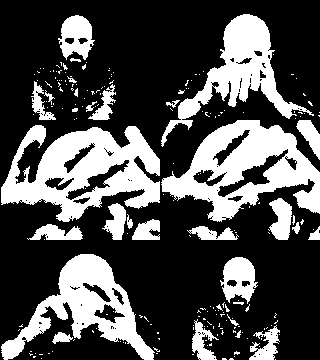
| The Cabaret is a series of three-dimensional portraits and videos of LGBTQ communities and their allies around the world. Drag queens, go-go dancers, bar tenders, artists, DJs, nudists, athletes, and some of the regulars are part of a group of unsung heroes that cherish their freedom as artists and outsiders, celebrating their own individuality. All the participants in the project were met in a wide range of social spaces, bars, dance clubs, coffee places, athletic events, and Christmas parties, that reflect the vast culture and dynamics of safe havens that thrive on freedom and self-expression - survival tools to face the rise of fascism in several countries. | |
Artist/Research Statement
I grew up in Bogotá back in the late 80s and early 90s, when car bombs were shaking the city, the drug cartels ruled the headlines, the AIDS crisis was taking our friends, and being an openly gay kid meant living under constant threat. Hiding was never an option for me. Instead, I took a camera, grabbed the mic, and threw myself into making video art, doing queer performances, and creating work that pushed back against the fear and silence around us.
In 1995, I packed my bags for New York with a Fulbright grant to do my master's at NYU's ITP, right as the web was taking off. For me, the internet was love at first sight: a totally open canvas where I could bring together non-linear storytelling, digital poetry, creative coding, and pure activism. Over the years, my toolkit has grown from writing early HTML and JavaScript to playing with depth sensors, creative code, and generative AI—taking the work off the browser screen and throwing it onto theater stages and gallery walls.
Even though I've made my life in the United States, my heart and head are still deeply tied to Colombia. My work is really about how we see ourselves, reinvent ourselves, and survive in digital spaces—which is always, inevitably, political. Visually, I love the friction between the raw, messy pixel glitch and the sleek perfection of high-res 3D and volumetric imaging. It's all about putting our real, queer bodies back into the machine.
Like Christopher Isherwood's idea of being a living camera, I use technology—from early video to the latest AI algorithms—to capture our community's spirit, our looks, our defiance, and our memories, making sure we stay visible and impossible to erase.
Crecí en Bogotá a finales de los 80 y comienzos de los 90, en una época dura en la que los carros bomba sacudían la ciudad, el narcotráfico llenaba las noticias, el sida se estaba llevando a nuestros amigos y ser abiertamente gay significaba vivir amenazado todo el tiempo. Esconderse nunca fue una opción para mí. Al contrario: agarré una cámara, me puse frente al micrófono y me metí de lleno a hacer videoarte, performances queer y piezas que le hicieran frente a ese miedo y a ese silencio.
En el 95 empaqué maletas y me fui a Nueva York con una beca Fulbright para hacer la maestría en el ITP de NYU, justo cuando internet apenas arrancaba. Para mí la red fue amor a primera vista: un lienzo abierto donde podía cruzar la narrativa no lineal, la poesía digital, el código creativo y el activismo puro. Con los años, las herramientas fueron cambiando: pasé de escribir código básico en HTML y JavaScript a experimentar con sensores de profundidad, programación creativa e inteligencia artificial generativa, sacando el trabajo de la pantalla del navegador para llevarlo a escenarios de danza, teatro y salas de exposición.
Aunque he hecho mi vida en Estados Unidos, la cabeza y el corazón los sigo teniendo bien amarrados a Colombia. Mi trabajo gira alrededor de cómo nos vemos, cómo nos reinventamos y cómo sobrevivimos en los entornos digitales, lo cual siempre termina siendo un acto político. A nivel visual, me encanta la fricción entre el error crudo del pixel y la perfección pulida del 3D o las imágenes volumétricas de alta resolución: al final se trata de meter nuestros cuerpos maricas y reales dentro de la máquina.
Siguiendo esa idea de Christopher Isherwood de ser una cámara viva, uso la tecnología —desde el video análogo hasta los algoritmos de IA más recientes— para registrar el espíritu, las miradas, la rebeldía y la memoria de nuestras comunidades, asegurándome de que sigamos presentes y que nadie nos pueda borrar.
I grew up in Bogotá back in the late 80s and early 90s, when car bombs were shaking the city, the drug cartels ruled the headlines, the AIDS crisis was taking our friends, and being an openly gay kid meant living under constant threat. Hiding was never an option for me. Instead, I took a camera, grabbed the mic, and threw myself into making video art, doing queer performances, and creating work that pushed back against the fear and silence around us.
In 1995, I packed my bags for New York with a Fulbright grant to do my master's at NYU's ITP, right as the web was taking off. For me, the internet was love at first sight: a totally open canvas where I could bring together non-linear storytelling, digital poetry, creative coding, and pure activism. Over the years, my toolkit has grown from writing early HTML and JavaScript to playing with depth sensors, creative code, and generative AI—taking the work off the browser screen and throwing it onto theater stages and gallery walls.
Even though I've made my life in the United States, my heart and head are still deeply tied to Colombia. My work is really about how we see ourselves, reinvent ourselves, and survive in digital spaces—which is always, inevitably, political. Visually, I love the friction between the raw, messy pixel glitch and the sleek perfection of high-res 3D and volumetric imaging. It's all about putting our real, queer bodies back into the machine.
Like Christopher Isherwood's idea of being a living camera, I use technology—from early video to the latest AI algorithms—to capture our community's spirit, our looks, our defiance, and our memories, making sure we stay visible and impossible to erase.
Crecí en Bogotá a finales de los 80 y comienzos de los 90, en una época dura en la que los carros bomba sacudían la ciudad, el narcotráfico llenaba las noticias, el sida se estaba llevando a nuestros amigos y ser abiertamente gay significaba vivir amenazado todo el tiempo. Esconderse nunca fue una opción para mí. Al contrario: agarré una cámara, me puse frente al micrófono y me metí de lleno a hacer videoarte, performances queer y piezas que le hicieran frente a ese miedo y a ese silencio.
En el 95 empaqué maletas y me fui a Nueva York con una beca Fulbright para hacer la maestría en el ITP de NYU, justo cuando internet apenas arrancaba. Para mí la red fue amor a primera vista: un lienzo abierto donde podía cruzar la narrativa no lineal, la poesía digital, el código creativo y el activismo puro. Con los años, las herramientas fueron cambiando: pasé de escribir código básico en HTML y JavaScript a experimentar con sensores de profundidad, programación creativa e inteligencia artificial generativa, sacando el trabajo de la pantalla del navegador para llevarlo a escenarios de danza, teatro y salas de exposición.
Aunque he hecho mi vida en Estados Unidos, la cabeza y el corazón los sigo teniendo bien amarrados a Colombia. Mi trabajo gira alrededor de cómo nos vemos, cómo nos reinventamos y cómo sobrevivimos en los entornos digitales, lo cual siempre termina siendo un acto político. A nivel visual, me encanta la fricción entre el error crudo del pixel y la perfección pulida del 3D o las imágenes volumétricas de alta resolución: al final se trata de meter nuestros cuerpos maricas y reales dentro de la máquina.
Siguiendo esa idea de Christopher Isherwood de ser una cámara viva, uso la tecnología —desde el video análogo hasta los algoritmos de IA más recientes— para registrar el espíritu, las miradas, la rebeldía y la memoria de nuestras comunidades, asegurándome de que sigamos presentes y que nadie nos pueda borrar.
Bio
Santiago Echeverry is a Colombian-American New Media Artist and Educator specializing in video art, interactive media, performance, and generative AI. A pioneer in Net Art and Latin American LGBTQ+ filmmaking since 1989, he holds degrees from Universidad Nacional de Colombia and NYU's ITP as a Fulbright Scholar. Currently Professor and Chair of Film, Animation, and New Media at the University of Tampa, his creative research bridges creative coding, UX, and generative video workflows for live stage and screen. Recent milestones include permanent acquisition by SESI Lab Brasília and an upcoming comprehensive career retrospective at Galería Santa Fe, Bogotá. All his projects are available online at www.santi.tv
Santiago Echeverry es un artista de nuevos medios y educador colombo-estadounidense especializado en videoarte, medios interactivos, 'performance' e inteligencia artificial generativa. Pionero del 'Net Art' y del cine LGBTQ+ en América Latina desde 1989, es egresado de la Universidad Nacional de Colombia y de ITP en NYU como becario Fulbright. Actualmente es profesor titular y director del Departamento de Cine, Animación y Nuevos Medios de la Universidad de Tampa. Su investigación artística articula programación creativa, UX y flujos de video generativo para artes escénicas y pantalla. Sus hitos recientes incluyen la adquisición por el SESI Lab de Brasilia y una retrospectiva integral en la Galería Santa Fe de Bogotá. Toda su obra se encuentra en su sitio web www.santi.tv
Santiago Echeverry is a Colombian-American New Media Artist and Educator specializing in video art, interactive media, performance, and generative AI. A pioneer in Net Art and Latin American LGBTQ+ filmmaking since 1989, he holds degrees from Universidad Nacional de Colombia and NYU's ITP as a Fulbright Scholar. Currently Professor and Chair of Film, Animation, and New Media at the University of Tampa, his creative research bridges creative coding, UX, and generative video workflows for live stage and screen. Recent milestones include permanent acquisition by SESI Lab Brasília and an upcoming comprehensive career retrospective at Galería Santa Fe, Bogotá. All his projects are available online at www.santi.tv
Santiago Echeverry es un artista de nuevos medios y educador colombo-estadounidense especializado en videoarte, medios interactivos, 'performance' e inteligencia artificial generativa. Pionero del 'Net Art' y del cine LGBTQ+ en América Latina desde 1989, es egresado de la Universidad Nacional de Colombia y de ITP en NYU como becario Fulbright. Actualmente es profesor titular y director del Departamento de Cine, Animación y Nuevos Medios de la Universidad de Tampa. Su investigación artística articula programación creativa, UX y flujos de video generativo para artes escénicas y pantalla. Sus hitos recientes incluyen la adquisición por el SESI Lab de Brasilia y una retrospectiva integral en la Galería Santa Fe de Bogotá. Toda su obra se encuentra en su sitio web www.santi.tv